Search This Blog

Showing posts with label Archaeology. Show all posts

Saturday, July 16, 2011

Wreck of Canadian schooner found in Lake Ontario

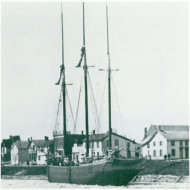
ROCHESTER, N.Y. (AP) — After 105 years, the three masts of the Queen of the Lakes still stand erect — all the more remarkable because the 19th-century Canadian schooner has sat in the dark depths of Lake Ontario since it wrecked in 1906.

"We think it hit bow first because the bowsprit is broken off, but the rest of the ship looks pretty nice," undersea explorer Jim Kennard said Friday.

Kennard and fellow shipwreck enthusiasts Dan Scoville and Roland Stevens located the 129-foot-long vessel using side-scan sonar in 2009. They confirmed the find and captured images of it in early July using a remotely operated submersible.

Loaded with 480 tons of coal, the 53-year-old ship ran into a stiff gale in November 1906, sprung a leak and sank rapidly some 10 miles off Sodus Bay on the lake's southern shore. The crew of six clambered aboard a yawl and rowed to safety.

The ship sits on the lake bed at a depth of 200 to 300 feet. Its masts extend as much as 100 feet upward in calm, frigid waters deprived of oxygen, conditions that account for how well it's preserved.

"When you have a temperature of, like, 39 degrees and you're at a depth where there's no wave action or current, the only thing that can damage the wood would be zebra or quagga mussels as they collect and grow in big clumps and fall off," Kennard said.

The invasive mussels were not introduced to the lake system until the past 15 years or so, he said. "Years ago, all you would see on the ship was just a dusting of silt," he added.

Its rigging and sails have long since disintegrated and the large, tapered spar extending forward from the bow is gone.

But both anchors and the mussel-coated wheel are firmly in place. Cables that held the masts in place lie in coils on the deck and a steam-powered winch that might have been added in the early 1900s is visible in the bow section.

The ship was sailing from Rochester to Kingston, Canada, when it began taking on water.

"I've read the most important item on such ships was the bilge pump," Kennard said. "A vessel that old was pushing its limits. In a Northeast storm, things are really getting jostled around and, all of a sudden, the bottom fell out. The crewmen were only within 50 feet of the boat when it sank. It went down really quickly."

In 2008 in Lake Ontario, Kennard's team located the wreck of the HMS Ontario, the oldest shipwreck ever found in the Great Lakes. During the American Revolution in 1780, the 22-gun British warship was lost in a gale with barely a trace and as many as 130 people aboard.

Since 1970, Kennard has helped find more than 20 wrecks in the Great Lakes and about 180 others in Lake Champlain, New York's Finger Lakes and the Mississippi and Ohio rivers.

Monday, July 11, 2011

Tug-of-war over Iraqi Jewish trove in US hands


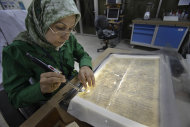
LAGOS, NIGERIA (Aladdin Sodiq Blog) — A trove of Jewish books and other materials, rescued from a sewage-filled Baghdad basement during the 2003 invasion, is now caught up in a tug-of-war between the U.S. and Iraq.

Ranging from a medieval religious book to children's Hebrew primers, from photos to Torah cases, the collection is testimony to a once vibrant Jewish community in Baghdad. Their present-day context is the relationship, fraught with distrust, between postwar Iraq and its Jewish diaspora.

Discovered in a basement used by Saddam Hussein's secret police, the collection was sent to the U.S. for safekeeping and restoration, and sat at the National Archives and Records Administration (NARA) in Maryland until last year, when Iraqi officials started a campaign to get it back.

Initially contacts went well, but now the deputy culture minister, Taher Naser al-Hmood, says "The Americans are not serious" about setting a deadline for getting back the archive.

U.S. officials deny that they are delaying its return. They say they only recently got the roughly $3 million needed to clean up the materials — the whole point of bringing them to the U.S. — and they question the rush to return the collection now, when the goal is so close.

"It is not U.S. government material, and we have every intention of returning it," said Phil Frayne, a spokesman for the State Department's Bureau of Near Eastern Affairs.

"We understand the frustration over the delay but we're happy that this is going to finally move forward," he said.

But al-Hmood was skeptical, saying he had not been told about the money. "Let the American side prove its goodwill," he said. "We cannot trust the Americans. They have not fulfilled their previous promises."

The case is complicated by the knee-jerk suspicions that cloud everything related to Jewish history in the Arab world, Iraq's attempts to assert its sovereignty after years of U.S. domination, and a diaspora trying to recover its history.

There are claims of Jewish pressure to prevent the return of the collection, and questions about why the U.S. didn't prevent the looting of Arab and Islamic treasures during the invasion but was able to bring the Jewish collection to safety in America. Among those voicing indignation about the transfer of the archive to America is Liwa Smaysim, the minister of archaeology, who belongs to a fiercely anti-American party in the government coalition.

On the other hand, once returned to Baghdad, the archive would likely be beyond the reach of Jewish scholars, especially Israeli ones, given the absence of diplomatic ties with Israel, and the anti-Semitism that exists here. Iraqi officials have vowed to restore the materials and digitize them so they're available outside of Iraq as well.

Besides parchments and photos accumulated over the years, the collection includes books printed in Baghdad, Warsaw and Venice, one of them a Jewish religious book published in 1568, and 50 copies of a children's primer in Hebrew and Arabic.

They are the lost heritage of what was once one of the largest Jewish communities in the Middle East, which dated to the 6th century B.C. and ended with an exodus after the creation of Israel in 1948. Today fewer than ten Jews are believed to be left here.

After the collection was found by a U.S. military team searching for weapons of mass destruction, the U.S.-headed agency temporarily governing Iraq signed an agreement with the Maryland archive to take its contents to the U.S.

It stipulated that the U.S. would restore and display the materials before returning them to Iraq., but that the Iraqi government could have them back any time it asked, regardless of whether the work was complete.

Iraqi Culture Ministry officials say they appreciate the U.S. efforts to save the materials, but are frustrated about getting them back.

They say that in meetings and conversations last year with the State Department and NARA, a decision was reached to return half the materials by the end of 2010, and the rest to be restored and displayed before also coming back to Iraq.

A NARA report, obtained through the Freedom of Information Act by The Associated Press, says Saad Eskander, the head of the Iraqi National Library and Archives, met with U.S. representatives on June 23, 2010 and they decided upon a plan, including the immediate return of half the archive. But for reasons no one can entirely agree upon, things began to fall apart.

Al-Hmood said that when the December deadline passed, the Iraqis decided to officially ask for the archive back, and repeated the request six months later. In response, he said, the U.S. sent messages discussing what he says are "technical issues" and which he considers procrastination.

However, the Iraqi government seems in two minds about the matter. Deputy Foreign Minister Labid Abawi, whose ministry is Kurdish-run and has close ties to the U.S. government, said it prefers the U.S. do the restoration, on the grounds that Iraq lacks the capability.

But Eskander and al-Hmood say the Iraqi Cabinet tasked their offices — not the Foreign Ministry — with recovering missing documents, and they're trying to do their job. A letter from the Coalition Provisional Authority, the U.S. agency that ran Iraq after the invasion, and obtained through the Freedom of Information Act, confirms the Ministry of Culture is charged with making decisions about the Jewish archive.

Eskander shepherded his library through the violence that followed the invasion and is getting a new five-story expansion project now being built. The rattle of gunfire has been replaced by the boom of construction, while staff repair other, similarly mold-infested documents — proof, Eskander says, that Iraq can and will do the needed restoration on the Jewish materials.

He himself is a Faihly, a member of a small Shiite-Kurdish minority persecuted under Saddam. He says it is vital that Iraqis know their history and that they be made aware that Jews were once part of this country.

He and al-Hmood also are pushing for the return of millions of sensitive security-related documents believed to be in CIA and Pentagon hands. These would be much more significant for the Iraqi people, but for now the Jewish archive has been the focus of activity.

Al-Hmood said "There are Jewish organizations that exert great pressure to prevent the return of the archive, claiming that there are no Jewish people in Iraq any longer."

The State Department says it has not succumbed to any pressure and is simply fulfilling its part of the agreement to restore the materials before returning them to Iraq.

Frayne said he understands the frustration over the delay but adds that with nearly $3 million in U.S. taxpayer money allocated, restoration can move ahead.

NARA will hire about ten people to do the work, and part of the money will go toward bringing Iraqi archivists to the U.S. and training them in restoration, said Doris Hamburg, NARA's director of preservation programs.

Frayne said the U.S. has reached out repeatedly to the Iraqi side to appoint an archival team to help draft an addendum to the 2003 agreement, but has received no response.

Although Al-Hmood and Eskander said they had not been told about the $3 million, Al-Hmood said talks could resume if a firm timeline was set for the archive's return.

The role, if any, of outside Jewish groups in the dispute is unknown, but Andrew Baker of the American Jewish Committee questioned why Iraqi officials were in such a rush and wondered who in the Jewish community would be able to make use of the collection once it is taken to Iraq.

A member of the Iraqi Jewish diaspora who follows the talks closely said it initially was hoped the archive would serve as a line of communication with the Iraqi government on other issues such as protecting Jewish cemeteries and shrines in Iraq.

But the perceived involvement of American Jewish organizations led to suspicions they were trying to block the archive's return, and the archive became an impediment to further talks, he said. He requested anonymity, citing the sensitivity of the archive issue.

___

On the Net:

NARA's 2003 report on the Archive: http://bit.ly/qqn4VM

___

Associated Press writer Qassim Abdul-Zahra in Baghdad and investigative researcher Randy Herschaft in New York contributed to this report.
Monday, May 23, 2011

World's Best Ruins

By Christine Sarkis


Ruins reach across centuries to fire the imagination and fuel travel plans. The very best make you feel young, small, and utterly amazed by the architectural chops of the ancients. Among the many amazing ruins that still exist today, a few stand out as the trip of a lifetime.

No matter which ruins you visit, a few rules hold true: Time your trip for the less crowded times of day, often early or late. Give yourself plenty of time, as some ruins require days of exploration. Hire a knowledgeable guide, since the history is rich but the signage is often cursory. And get beyond the most popular parts of the ruin; you'll need a bit of quiet space to appreciate this kind of ancient majesty.


Machu Picchu, Peru


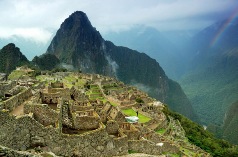
The journey to Machu Picchu is epic even with relatively newfangled transportation like trains. But each year, about 25,000 people forgo the more direct routes and walk for days along the 27-mile Inca Trail to reach the ruin. Since its rediscovery a century ago, this treasure of the Inca set high in a cloud forest of the Peruvian Andes has captured imaginations worldwide. The massive stone blocks tell the story of both a sprawling agricultural zone with terracing and ancient food storehouses and an urban zone replete with temples, squares, tombs, and living quarters. If you're considering a trek to Machu Picchu, plan ahead: You can only make the hike with a licensed company, and spots book up quickly, especially in high season.


Acropolis, Greece


Waiting for the traffic to speed past at a crowded intersection in Athens, you're likely to forget that history keeps constant watch over the city. Glance up, however, and you'll catch the view Athenians and visitors alike have been admiring for the last 2,500 years. Time has battered the once-pristine temples and gates that crown the hill of the Acropolis, leaving stone ruins that retain a familiar splendor even after thousands of years of wear and destruction. The elegant proportions of the fifth-century B.C. Parthenon and the Temple of Athena Nike—both dedicated to the city's patron deity—are a reminder of how much we still rely on ancient Greece for our concepts of beauty.


Mesa Verde, United States


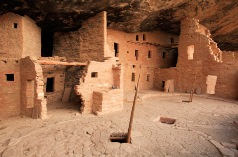
Great ruins aren't always an ocean away: Some of the best preserved Native American cliff dwellings in North America reside in Mesa Verde National Park in Colorado. Home to the Ancestral Puebloans—whose descendants became 20 different Southwestern tribes, including the Hopi and Zuni—Mesa Verde traces 700 years of history across 4,000 archeological sites. Visit mesa-top pueblos and the dwellings built beneath massive overhanging cliffs. Ascend steep trails and ladders, or crawl through tunnels to explore ancient architecture such as the 150-room Cliff Palace or the hard-to-reach Balcony House. The park's hours vary by season, and not all sites are open year-round.


Angkor, Cambodia


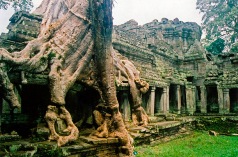
War or natural disaster might have weakened the Khmer Empire's ancient capital, but ultimately, it was the jungle that conquered this ninth- to fifteenth-century urban center. Today, the densely forested 150-square-mile Angkor Archaeological Park protects part of a vast cluster of ancient capitals, many of which remain buried. The park's most famous temple, Angkor Wat, is the world's largest religious building. But the park's dozens of other ruins, including Bayon temple with its wall of 11,000 carved figures, offer quieter glimpses into the art and architecture of this culturally rich 600-year period.


Great Pyramids And Memphis, Egypt


Political unrest or no, a roundup of the world's best ruins can't exclude Egypt. The last existing ancient wonder of the world, the Great Pyramid of Giza stands as a lone window into the far past. With more than 4,000 years to ponder the question, experts still can't agree on how the builders placed more than 2 million stone blocks so perfectly. The rest of the Giza Necropolis holds more wonders: two more Great Pyramids, built during 80 years by 20,000 to 30,000 workers, plus the Great Sphinx, cemeteries, and the ruins of a village. The pyramids are part of a larger UNESCO World Heritage site that includes Memphis, the capital of the Old Kingdom of Egypt. A trip can even include some up-close-and-personal time: Visitors can explore the interiors of some of the pyramids. And the recent drop in tourism offers intrepid travelers the rare chance to experience the pyramids without the usual crowds.


Tikal, Guatemala


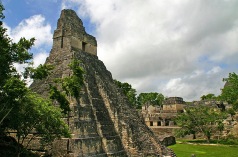
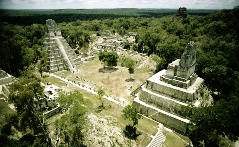
Stay overnight in the national park for the ultimate experience at Tikal, an ancient Maya city in northern Guatemala that was home to 90,000 people before being abandoned in the tenth century. Early the next morning, before the park opens to the general public, join a small group making the trek through a jungle awash in the pre-dawn symphony of birds and insects. Climb to the top of Temple IV, the Temple of the Two-Headed Serpent, to witness a sunrise that reveals ancient temples and pyramids rising from the verdant forest blanket. You've still got hours to explore this vast complex of pyramids, temples, and plazas before the big crowds roll in. Along the way, catch glimpses of brown coatis, toucans, howler monkeys, and some of the hundreds of other species to call Tikal home.


Petra, Jordan


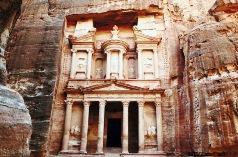
Hailed as a "rose-red city half as old as time" in a 19th-century poem, the ancient city of Petra was half built and half carved into red sandstone cliffs. Nabataean Arabs established the city in the sixth century B.C., and for hundreds of years it thrived as a trade center for frankincense, myrrh, and spices. Now, as then, enter the ruins of the city through a narrow, half-mile-long gorge squeezed between cliffs nearly 300 feet high. Inside, explore architecturally elaborate tombs and temples, sacrificial altars, and even a Roman-style amphitheater. Most people explore on foot, but visitors can also ride camels and donkeys. The sun lights up the red cliffs of Petra most dramatically in mid-morning and late afternoon, so be sure to time your visit accordingly.


Colosseum, Italy


Digitally reimagined in Hollywood blockbusters such as Gladiator, the camera really shaves millennia off Rome's Colosseum. But the 2,000-year-old ruins are so evocative up close that special effects seem superfluous. With a bloody history of fights to the death between gladiators, slaves, prisoners, and wild animals, the Colosseum held 50,000 spectators or more in its heyday. Later, Romans used the abandoned arena as a quarry: Stones from the Colosseum are part of the cathedrals of St. Peter and St. John Lateran. Last summer, entirely new sections of the ruin—including the basement— were opened for tours.


Great Wall Of China, China


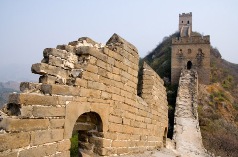
Like a dragon, the Great Wall of China slithers its way across the landscape for about 4,500 miles, and, like a dragon, the wall protects something treasured. Constructed to shelter China's people and culture from the outside world, the "Long Wall of 10 Thousand Li" was built during 2,000 years by many imperial dynasties. While some parts of the wall are in ruins or have disappeared entirely, other sections have been restored or preserved. The most popular section today is the Badaling Great Wall, close to Beijing. Slightly farther from the capital city and offering a more rugged (and less crowded) experience is the Great Wall at Mutianyu. In Qinhuangdao City, the Laolongtou Great Wall actually stretches into the sea, and is said to resemble a dragon drinking water.


Palmyra, Syria


Twice a day, at sunrise and sunset, the Bride of the Desert blushes, even 18 centuries after her birth. Palmyra, also known as Tadmor, is in the desert northeast of Damascus, Syria, and was once a wealthy caravan oasis along the Silk Road, linking Persia, India, and China with the Roman Empire. At a crossroads of cultures, the ruins of grand colonnaded streets, temples, funerary towers, and aqueducts demonstrate a mingling of influences that made this an awfully cosmopolitan place for the second century. Palmyra was also home to the warrior queen and conqueror Zenobia, and tour guides tell exciting tales that give this seemingly isolated place a starring role in world history.

Monday, April 11, 2011

Little-Known Man-Made Wonders of the World

Not all of the world's wonders get the attention they deserve. We searched the globe to find nine marvels that are so awe-inspiring, you'll find it hard to believe that they were crafted by human hands—and so far off the beaten path, chances are you've never heard of them


Of course you've heard of Machu Picchu and Angkor Wat, but have you heard about an Incan city that seems truly lost to today's travelers, or the complex of 52 pre-Angkorian temples so deep in the Cambodian jungle that it takes a local to guide you there? These destinations are jaw-dropping, but they don’t pull in the massive western crowds for a reason: Some of them are remote. That's where we come in with suggested tour operators to make the experience easier and well worth it.


Sichuan, China

A Buddha so large it took 90 years to build

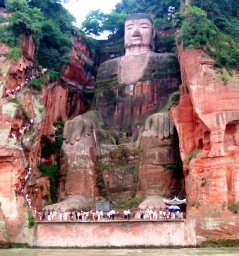
It took almost the entire 8th century to carve the 233-foot-tall Leshan Giant Buddha out of a mountainside in central China—about 1,400 miles west of Shanghai (and far out of sight and mind for most travelers)—but the result still stands as one of the world's largest Buddhas. Its ears alone are more than 23 feet in length (that’s the height of a two-story building), and even its smallest toe is large enough to sit on comfortably. But it’s not only the Buddha’s giant scale that’s impressive. On its head are 1,021 intricate, twisted hair buns hiding a complex drainage system that helps preserve the statue. The Mount Emei area itself has enormous religious significance; Buddhism was first introduced to China here. Thrill seekers can get up close to witness the Buddha’s sheer size by navigating down a steep, 250-step zigzag path along its side; those looking to take in the statue from a distance (and see additional figures carved into the cliff) can opt for a boat ride—the statue sits at the confluence of where three rivers meet.


Karelia, Russia

An open-air museum of elaborate wooden churches


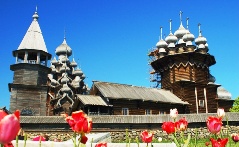
It requires a flight or overnight train ride from Moscow or St. Petersburg and then a ferry ride to reach Kizhi Island, part of the 1,650-island chain on northern Russia’s remote Lake Onega. Your reward is becoming one of the choice few to explore the one-of-a-kind State Kizhi Museum, made up of nearly 90 wooden structures, including chapels, windmills, and granaries. Its most remarkable portion, set on a narrow strip of land on the island’s southern tip, is Kizhi Pogost, a walled enclosure that houses an octagonal bell tower and two 18th- century wooden churches. Twenty-two cascading bulbous cupolas fashioned from aspen shingles top the 121-foot Church of the Transfiguration of Our Savior. Amazingly enough, this masterpiece was built without a single nail. Legend has it that a sole axe was used to carve the shingles and the interlocking corner joinery that hold the majestic structure up, and after its completion, was tossed into the water so a similar marvel couldn’t be built.


Lalibela, Ethiopia

Medieval churches made out of volcanic red rock


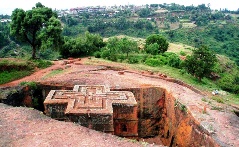
Unless you're from Ethiopia, chances are you don't know about these 11 medieval churches in the small mountain village of Lalibela. The destination is first and foremost a place of worship, which explains why the Ethiopians haven't done more to market it to tourists. You don't have to be devout, however, to marvel at the churches' unusual design. Legend has it that a visit to Jerusalem after its fall to a Muslim general in the 13th century inspired King Lalibela to rebuild the holy city in Ethiopia. He commissioned workers to dig these churches out of the area's red volcanic rock. One remarkable group of four—the House of Emmanuel, House of Mercurios, House of Gabriel, and House of Abba Libanos—was created from the same massive piece and connected by underground passageways. Light filters into the cruciform structures through cross-shaped windows. Another church, the Beta Medhane Alem (House of the Saviour of the World), rests some 35 feet below the surface of the desert.


Kampong Thom Province, Cambodia

Cambodia's oldest temple complex


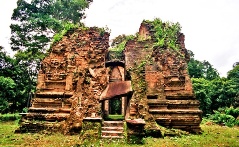
Built during the 7th century, the 52 standing temples of Sambor Prei Kuk are part of the remains of the former capital of Chenla, an ancient kingdom that once ruled much of present-day Cambodia. Spread across three square miles of jungle in Cambodia's Kampong Thom province, the complex predates even the oldest temples of Angkor by some 600 years. Amazingly, it's also far beneath the radar of most travelers—a meager 5,000 annual international visitors make it out to this destination, compared to the million-plus tourists who visit Angkor Wat (that may have something to do with the fact that getting to Sambor Prei Kuk entails a three-hour drive from either Siem Reap or Phnom Penh along the bumpy, stray-dog-ridden National Route No. 6). If you do want to visit, the new Isanborei community tourism project provides local English-speaking guides who will take you around the temples on a tuk tuk. If you’re looking for a truly authentic experience, opt for one of their homestays—you can live with a family, learn how to cook traditional dishes, and even help harvest rice.


Malta and Gozo

World's oldest freestanding monuments


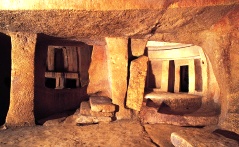
The stone temples on these small Mediterranean islands wedged between Sicily and Tunisia don't get much attention these days; you won't see them in a big-screen thriller or from a mega cruise ship. But as far back as 5000 B.C., millennia before work began on the Great Pyramid of Giza, they were drawing hordes of worshippers. Hagar Qim, the grandest temple complex, commands attention from its hilltop location on Malta’s southern coast. It was constructed from enormous limestone slabs raised to form doorways with lintels (similar to those at Stonehenge) and semicircle formations; one slab stands a commanding 20 feet high and, weighing nearly 20 tons, is believed to be among the largest of any temple. Hagar Qim’s best statues—three “fat lady” figurines and a slimmer Venus of Malta—were excavated in the mid-20th century and are now housed in the National Museum of Archaeology in the Maltese capital city of Valletta. But if you look closely while at Hagar Qim, you’ll find carvings of spirals, animals, and goddesses—all the more impressive given the builders' limited tools: flints and obsidian blades.


Choquequirao, Peru

The truly lost Incan city


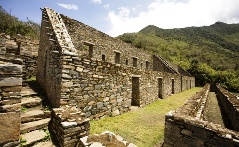
These 15th-century ruins, which consist of a central plaza and dozens of slope terraces built some 6,000 feet above the glacier-fed Apurímac River, received fewer than 7,000 visitors in 2006. That’s just a little more than 1 percent of those that made the trek to its far more famous sister site, Machu Picchu, whose nickname “The Lost City of the Incas” seems misleading given its typical tourist crowds. But at its height, Choquequirao was no less significant: It was roughly the same size as Machu Picchu and believed to be the last main religious center of the Incan Empire before its fall. From the tiny town of Cachora (about 100 miles away from Cuzco), getting to Choquequirao is an arduous 20-mile trek. You’ll pass arid country full of cacti and agave before the vegetation turns lush. Take a breather to spot the occasional condor, and exhale with the jagged, snow-capped Vilcabamba Range in the distance.


Isfahan, Iran

An unexpected royal city


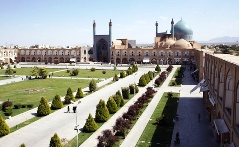
When Shah Abbas chose to relocate the capital of the Persian Empire to Isfahan around 1600, he was determined to make a big impression. So surely he'd be disappointed to know that centuries later his masterpiece remains hidden in plain sight—at least for Americans, who are largely restricted from and cautioned against visiting Iran. The Shah's massive building centered on grand Naqsh-e Jahan Square, which he surrounded with four monumental structures: the gleaming, mosaic-tiled Royal Mosque to the south, the Portico of Qaysariyyeh to the north, the Mosque of Sheykh Lotfollah to the east, and the magnificent entrance to Ali Qapu palace and the royal gardens to the west. Ali Qapu's grand covered balcony was where the shah and his guests would watch polo matches, horse races—even public executions. Inside, spiral staircases connect each floor, and the walls are adorned with intricate bird-patterned murals. Even more impressive is its sixth floor Music Room, covered with ornately decorated stucco niches and cutouts in the shapes of pots and vessels that once reverberated the sounds of the ensembles who performed there.


El Mirador, Guatemala

A Mayan complex that's still unearthing marvels


The little-known Mirador Basin, hidden among 2,000 years of jungle growth in northern Guatemala, is called the Cradle of Maya Civilization—and for good reason. Its five Preclassic Maya cities—El Mirador, Nakbe, Xulnal, Tintal, and Wakna—are each larger and older than the nearby (and far more famous) Tikal by at least 1,000 years. Among their astounding innovations are super-size temples and pyramids, including La Danta, the largest -known pyramid in the world measured by volume, and the remains of the world's first highway system. And there may be more to uncover: Just two years ago, archaeologists discovered a massive limestone frieze that dates back to 200 B.C. But illegal logging and tree clearing to make way for cash crops like corn are threatening the forests (an alarming 70 percent has been destroyed in just a decade). In an effort to preserve the region, an international effort led by the Global Heritage Fund with help from the Guatemalan and U.S. governments is underway to establish an 810,000-acre national park in the region.


Lucknow, India

A gravity-defying palace


Few people have heard of Lucknow, capital of the eastern region of Uttar Pradesh in India, and even fewer know of the maze-like palace complex—a blend of European and Arabic architecture—that is located there. It was the brainchild of 18th-century ruler Nawab Asaf-ud-Daula, who put nearly 22,000 city residents to work during a severe famine (struggling noblemen were rumored to have come in at night to avoid being identified among the crew). Bara Imambara's magnificent central arched hall—which stretches 50 meters long (roughly half the length of a soccer field) and about three stories high—is held up, amazingly, without any pillars, girders or beams. Instead, the hall was constructed solely with interlocking brickwork. Another one of its mysteries is the Bhulbhulaiya, a dense labyrinth of more than 1,000 narrow stairway passages meant to thwart any possible intruders—some stairways lead to abrupt drops, others have dead ends. It’s possible to roam around the secret maze, preferably with an approved guide, and to explore the adjacent mosque and manicured gardens.

Thursday, July 29, 2010

Ship lost for more than 150 years is recovered


TORONTO – Canadian archeologists have found a ship abandoned more than 150 years ago in the quest for the fabled Northwest Passage and which was lost in the search for the doomed expedition of Sir John Franklin, the head of the team said Wednesday.

Marc-Andre Bernier, Parks Canada's head of underwater archaeology, said the HMS Investigator, abandoned in the ice in 1853, was found in shallow water in Mercy Bay along the northern coast of Banks Island in Canada's western Arctic.

"The ship is standing upright in very good condition. It's standing in about 11 meters (36 feet) of water," he said. "This is definitely of the utmost importance. This is the ship that sailed the last leg of the Northwest Passage."

The Investigator was one of many American and British ships sent out to search for the HMS Erebus and the Terror, vessels commanded by Franklin in his ill-fated search for the Northwest Passage in 1845.

Environment Minister Jim Prentice said the British government has been notified that one of their naval shipwrecks has been discovered, as well as the bodies of three sailors.

Captained by Robert McClure, the Investigator sailed in 1850. That year, McClure sailed the Investigator into the strait that now bears his name and realized that he was in the final leg of the Northwest Passage, the sea route across North America.

But before he could sail into the Beaufort Sea, the ship was blocked by pack ice and forced to winter-over in Prince of Wales Strait along the east coast of Banks Island.

The following summer, McClure tried again to sail to the end of the Passage, but was again blocked by ice. He steered the ship and crew into a large bay on the island's north coast he called the Bay of Mercy.

There they were to remain until 1853, when they were rescued by the crew of the HMS Resolute. The Investigator was abandoned.

"This is actually a human history," said Bernier. "Not only a history of the Passage, but the history of a crew of 60 men who had to overwinter three times in the Arctic not knowing if they were going to survive."

The Parks Canada team arrived at Mercy Bay on July 22. Three days later, the ice on the bay cleared enough that researchers were able to deploy side-scanning sonar from a small inflatable boat over the site where they believed the wooden ship had eventually sunk. Within 15 minutes, the Investigator was found.

"The ship had not moved too much from where it was abandoned," said Bernier.

The masts and rigging have long been sheared off by ice and weather. But the icy waters of the McClure Strait has preserved the vessel in remarkably good condition.

"It's incredible," said Prentice from Mercy Bay. "You're actually able to peer down into the water and see not only the outline of the ship but actually the individual timbers.

Archaeologists have also uncovered artifacts on land left behind by the stranded sailors, who unloaded everything before abandoning the Investigator.

The graves of three sailors thought to have died of scurvy have been marked off and will be left undisturbed, said Bernier.

Bernier said the next step will be to send down a remote controlled video camera to get actual pictures of the wreck. There are no plans to bring it to the surface and all legal steps will be taken to ensure the site remains protected.

Bernier also said the team will use similar technology to find the Erebus and Terror.


Copyright: Yahoo News