Search This Blog

Showing posts with label Japan. Show all posts

Monday, August 8, 2011

World leaders confer on debt crises this weekend


PARIS/WASHINGTON (Reuters) - Global leaders on Saturday arranged a round of emergency calls to discuss the twin debt crises in Europe and the United States that are causing turmoil in financial markets.

After a week that saw $2.5 trillion wiped off global stock markets, they are under pressure to show political leadership and reassure markets that Western governments have both the will and ability to reduce their huge and growing public debt loads.

French President Nicolas Sarkozy, who chairs the G7/G20 group of leading economies, conferred with Britain's Prime Minister David Cameron ahead of a call planned for this weekend by G7 finance ministers and central bankers.

"They discussed the euro area and the U.S. debt downgrade. Both agreed the importance of working together, monitoring the situation closely and keeping in contact over the coming days," a spokesman for Cameron said.

Standard and Poor's deepened the urgency for action late on Friday by stripping the United States of its top-tier AAA credit rating, a move that over time could ripple through markets worldwide by pushing up borrowing costs and making it more difficult to secure a lasting recovery.

It cited the acrimonious debate in Washington on raising the debt ceiling and near political paralysis over the best way to reduce the its $14.3 trillion debt, which on the current trajectory could climb above 100 percent of U.S. national output this decade.

President Barack Obama called on lawmakers once again on Saturday to set aside partisan politics and work together and to put the nation's fiscal house in order and stimulate the stagnant economy.

But the most immediate concern for financial markets was the debt crisis in the euro zone, where yields on Italian and Spanish debt have soared to 14-year highs on political wrangling and doubts over the vigor of budget cuts.

The European Central Bank was scheduled to hold a rare Sunday conference call. Markets are anxiously looking for the central bank to start buying Italian and Spanish debt on Monday to stabilize prices, a move that has split the ECB governing council.

Investors saw the ECB's failure to include Italy and Spain in a relaunch of its bond purchases late last week as a sign of the depth of political divisions over the role of the euro zone currency. German officials want to see stiffer austerity programs in place before the ECB would shoulder more Italian and Spanish debt. The danger is that further pressure on Italian and Spanish bonds could undermine an already damaged European banking system and lock Italy, the world's eighth largest economy, out of the market.

Italy's Prime Minister Silvio Berlusconi, his government weakened by infighting, ruled out early elections to stem market panic. "This has never been an option," Berlusconi said. Instead he has pledged to bring forward austerity measures and balance the budget by 2013, a year ahead of schedule -- steps the ECB will consider to gauge whether to buy its bonds.

S&P's one-notch downgrade of the U.S. sovereign credit rating to AA-plus, while not totally unexpected, adds another level of uncertainty. Loss of gold-plated status for the world's benchmark interest rate risks pushing up borrowing costs on everything from car loans, mortgages and corporate debt to government bonds worldwide.

"However justified, S&P couldn't have picked a worse time to downgrade the U.S.," said Rabobank in a note to clients.

A senior European diplomatic source said the U.S. downgrade, coupled with Europe's problems, raised the need for international policy coordination. G7 finance ministers and central bankers of the major industrialized nations were to hold talks by telephone on either Saturday or Sunday, the source said. Their deputies from the broader G20 were due to hold a call on Saturday evening, a Brazilian finance ministry source said.

A U.K. official said "senior officials" also would talk late on Saturday. There was no indication of whether a statement would be issued by G7 or G20 policymakers, the usual method by which they lay out policy steps designed to soothe markets or provide them with direction.

DEBT ADDICTION

China, the largest foreign holder of U.S. debt, took the world's economic superpower to task for allowing its fiscal house to get into such disarray. It also revived its calls for a new stable global reserve currency to replace the U.S. dollar, gaining a sympathetic ear in the United Kingdom.

"The U.S. government has to come to terms with the painful fact that the good old days when it could just borrow its way out of messes of its own making are finally gone," China's official Xinhua news agency said in a commentary.

Xinhua scorned the United States for a "debt addiction" and "short sighted" political wrangling. China, it said, "has every right now to demand the United States address its structural debt problems and ensure the safety of China's dollar assets."

China and Japan have called for coordinated action to avert a new worldwide financial crisis. India's Finance Minister Pranab Mukherjee told reporters: "There is no need to unnecessarily press the panic button."

Dutch Finance Minister Jan Kees de Jager said: "I am in constant contact with colleagues in other countries and am following the development of the financial markets closely."

Recrimination flew thick and fast among U.S. politicians over its debt downgrade, with each side seeking to blame the other for the impasse over how to solve the fiscal crisis.

Senator Jim Demint, a Republican, said Obama should demand the resignation of Treasury Secretary Timothy Geithner.

In contrast, French Finance Minister Francois Baroin said France had faith in the United States to get out of this "difficult period." Friday's U.S. unemployment numbers were better than expected and so things were heading in the right direction, he said.

"One should not dramatize, one needs to remain cool-headed, one should look at the fundamentals," he told France's iTele.

"There is no need for panic," Polish Prime Minister Donald Tusk said. "We will see in August, and maybe more intensively in September what the effects for the world economy will be."

Sunday, June 12, 2011

World's Most Expensive Cities 2011

Americans might complain about the high cost of living, but overseas the U.S. dollar is even weaker. Find out where it buys the least.

Australia, former penal colony, home to the Great Barrier Reef, and producer of world-class shiraz, has never exactly been synonymous with a high cost of living. Yet because of a strong economy and proximity to the booming Asia Pacific region, many overseas visitors might find it more expensive to slip an extra shrimp -- or just about anything else for that matter -- on the barbie here than in most other countries around the world. In fact, in a recent survey, six Australian cities placed among the top 30 most expensive in the world, according to global human resources firm ECA International. Just two years ago, not a single Australian city ranked in the top 100.


Australia is not alone in becoming more expensive. Singapore, for example, rose to No. 36 in ECA's ranking, from No. 68 last year, on the strength of the Singapore dollar. Caracas, Venezuela, rose from No. 91 to No. 15, a result of rampant inflation.

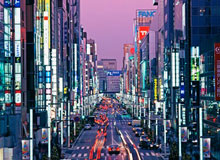
The city that earns the dubious honor of being the most expensive for holders of U.S. dollars is Tokyo, a rank it also enjoyed last year. How expensive is it? How about $24 for a movie ticket and nearly $11 for a beer. Japan dominated the ranking with four of the 10 most expensive -- in addition to Tokyo, Nagoya (No. 3), Yokohama (No. 5), and Kobe (No. 9) also made the list.

Due to the weakened U.S. dollar, no U.S. city ranked in the top 30 this year. The country's most expensive city, Manhattan, N.Y., fell to No. 44, from No. 28 in 2010, making it cheaper than Canada's Toronto (No. 37) and Vancouver (No. 42). The U.S.'s second most expensive city, Honolulu, fell to No. 62 from No. 40. (And while they haven't yet, it could be only a matter of time before Beijing (No. 46) and Shanghai (No. 47) crack the top 30.)

Of course, a weak dollar is not necessarily a bad thing. "If the U.S. continues to be relatively cost-effective in an international context, we will see companies pay more attention to whether they are saving money by expanding operations in places like Asia if the cost of living in these places is increasing," says Lee Quane, ECA International's regional director for Asia.

Aussie Dollar Strengthens

ECA International's ranking is based on a survey carried out in more than 400 cities worldwide in March. It compares the costs of living for expatriates maintaining a standard of living on a par with developed countries to guide employers' salary and benefits offers. Items such as food and beverage, basic goods and services, and some entertainment are included, but the survey excludes housing, utilities, car purchases, and school fees, which can vary widely and typically are counted separately in expatriate compensation packages.

A combination of inflation, availability of goods, and exchange rates affect costs. "The strong Australian dollar, which hit parity with the U.S. dollar last November and has strengthened further since, has been a significant factor behind the continued rise of Australian locations up the global ranking," Anna Michielsen, general manager for Australia, New Zealand, and the Pacific for ECA International, said in a release.

The Australian dollar has strengthened by nearly 30 percent against the U.S. dollar since last June. That means a $100 meal would have cost about $83 last June and now costs about $106. The country is also becoming more expensive than other locations in Asia: ECA points out that goods and services in Sydney were only 3 percent more expensive than in Hong Kong last year and are now 17 percent more costly.

Rising prices, particularly of food and energy, also play a role: Fruit prices in Australia were up 24.9 percent year-on-year in the first quarter and vegetable prices 18.7 percent (due in part to floods); electricity rose 11.7 percent and gasoline 9.3 percent, according to the Australian Bureau of Statistics. Overall consumer prices in the quarter were 3.3 percent above their level a year ago. The bureau forecast in January that weekly living costs for families could increase by as much as A$100 per week this year.

Deteriorating Competitiveness

The cost of a quick lunch in a Sydney restaurant is now $27.10, compared with $20.57 in Manhattan; a dozen eggs is $5.60, against $3.65 in Manhattan; and a tube of toothpaste is $5 vs. $3.72 in Manhattan, according to ECA International.

Since 2004, Australia has seen a deterioration in its relative competitiveness doing business globally, says Glenn Mair, director of MMK Consulting in Vancouver and a leader of KPMG's Competitive Alternatives study, which analyzes the costs of doing business in cities around the world.

In 2004, the cost of doing business in Australia was about 8.5 percent lower than in the U.S., according to KPMG's report. By 2010, the gap had shrunk to 2.2 percent, due to Australia's strong dollar and stable economy during the global economic crisis.

"I anticipate some improvement for U.S. [competitiveness] if currency trends stay the same," Mair says. He adds, however, that volatile exchange rates can make this hard to predict.

It is too early for companies to change their strategy based on recent cost changes, and many other considerations are involved, says ECA's Quane. Still, signs are that U.S. cities may be becoming more cost competitive for businesses.

World's Most Expensive Cities 2011

No. 1: Tokyo

Quick lunch: $20.80
Beer at a bar: $10.56
Kilogram of rice: $9.80
Dozen eggs: $4.50
Movie theater ticket: $23.80

Although the consumer price index in the Tokyo area has been falling since 2009, according to data from Japan's statistics bureau, the city remains the world's most expensive. While housing costs are not included in this survey, ECA International estimates that the average monthly rent for a two-bedroom apartment in Tokyo stood at $4,352 in September.

No. 2: Oslo

Quick lunch: $45.20
Beer at a bar: $13.18
Kilogram of rice: $6.10
Dozen eggs: $8.50
Movie theater ticket: $18.80

Norway's capital is a major hub for trade, shipping, and finance and is home to the Oslo Stock Exchange. Oslo has ranked among the world's most expensive cities for years, which is not surprising when a quick lunch costs about $45 and a dozen eggs, $8.50.

No. 3: Nagoya, Japan

Quick lunch: $19
Beer at a bar: $11.37
Kilogram of rice: $8.50
Dozen eggs: $3.60
Movie theater ticket: $21.80

Nagoya is one of Japan's premier industrial and technological centers and is well known for its high quality of life and competitive business costs, according to the U.S. Commercial Service. Unlike Japan's other major cities, Nagoya was not significantly harmed by the global economic downturn and has maintained its growth.

No. 4: Stavanger, Norway

Quick lunch: $32.30
Beer at a bar: $12.83
Kilogram of rice: $5.70
Dozen eggs: $6.80
Movie theater ticket: $17.30

Stavanger was mainly a fishing community until oil was found in the North Sea in the 1960s, transforming it into a major Norwegian city. Today, Norway is a leading oil exporter, with Statoil as the largest oil company in the Stavanger region. The industry has become central to the local economy and has attracted many residents from other countries.

No. 5: Yokohama, Japan

Quick lunch: $16.90
Beer at a bar: $6.59
Kilogram of rice: $4.20
Dozen eggs: $2.50
Movie theater ticket: $21.70

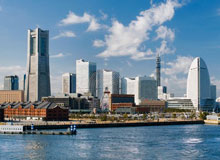
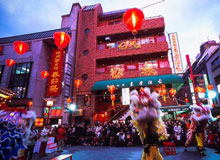
Japan's second-largest city after Tokyo, Yokohama is easily reached from Tokyo by train. The port city is home to over 300 IT firms and has a growing biotechnology base, according to the city. Yokohama has nine main business districts and exports many cars and auto parts.

No. 6: Zurich

Quick lunch: $32.90
Beer at a bar: $10.54
Kilogram of rice: $3.70
Dozen eggs: $7.90
Movie theater ticket: $19.60

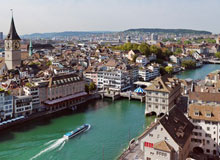
The financial sector is an important part of Zurich's economy and the city is home to the Swiss Stock Exchange and companies such as Credit Suisse and Swiss Re. Zurich is also a major transportation hub. Mercer ranked the city second in the world for quality of life in 2010, but such a high standard of living does not come cheap: Zurich jumped to No. 6, from being the 10th most expensive city last year.

No. 7: Luanda, Angola

Quick lunch: $52.40
Beer at a bar: $6.62
Kilogram of rice: $4.60
Dozen eggs: $5.20
Movie theater ticket: $13.90

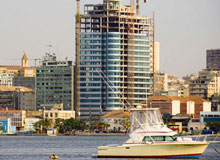
Luanda was the most expensive city in the world in ECA International's 2009 ranking. Last year it slipped to third place, due to the depreciation of the kwanza, and this year it fell again, to No. 7. While the city has a high poverty rate, it remains one of the most expensive places for expatriates to maintain standards of living comparable to those in their home countries.

No. 8: Geneva

Quick lunch: $33.70
Beer at a bar: $9.12
Kilogram of rice: $4.70
Dozen eggs: $8.60
Movie theater ticket: $19.20

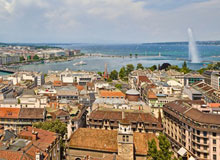
Truly a global city, Geneva is home to such international organizations as the United Nations (which has an office in the city) and the International Committee of the Red Cross. An important center for banking, government, and technology, Geneva attracts many professional visitors, as well as tourists. It ranked as the third-best city in the world for quality of life in Mercer's 2010 report.

No. 9: Kobe, Japan

Quick lunch: $15.60
Beer at a bar: $8.69
Kilogram of rice: $9.30
Dozen eggs: $3.10
Movie theater ticket: $20.80

Kobe is one of Japan's busiest ports and a manufacturing center for appliances, food, and transportation equipment. The city offers many types of cuisine, though it's known best for high grade and pricey Kobe beef.

No. 10: Bern, Switzerland

Quick lunch: $28.80
Beer at a bar: $7.46
Kilogram of rice: $4.70
Dozen eggs: $8.40
Movie theater ticket: $19.10

Switzerland's capital, Bern is the center of Swiss government, the engineering industry, and the precision industry, as well as a manufacturing center for watches and other technology used in the medical, IT, and automotive sectors, according to the Bern Economic Development Agency. Branded watches such as Rolex, Longines, Swatch, and Rado are manufactured in the Canton of Bern.

Monday, June 6, 2011

World's Best New Hotels 2011

From a hillside African lodge to a Brazilian eco-retreat, these are the year’s best new hotels.

By Travel+Leisure Staff


For our annual It List, a compendium of the world’s most noteworthy new hotels, Travel+Leisure editors and writers logged thousands of miles in search of the next best new hotels for you to lay your head.


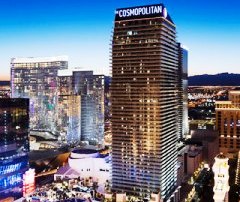
Cosmopolitan

Las Vegas


Finally, a Vegas hotel for design geeks and food nerds. Guest rooms have Fornasetti wallpaper in the closets, furniture with solid modern lines, a generous soaking tub, C.O. Bigelow toiletries, art you will actually think about, and stacks of Phaidon books on the bedside. Venture into the David Rockwell–designed Chandelier bar and to restaurants by heavyweights including Scott Conant (Scarpetta), Bromberg Brothers (Blue Ribbon Sushi Bar & Grill), and José Andrés (Jaleo; China Poblano). Doubles from $195.


Olarro

Loita Hills, Kenya


With a silent partner like Paul Allen (yes, that Paul Allen) backing Olarro, it’s no wonder this hillside lodge overlooking the Masai Mara is becoming Kenya’s next high-profile hideaway. Designer Anthony Russell has worked his magic on the seven thatched cottages and a two-bedroom villa: the tiled floors resemble giraffe markings, and the billowing fabric ceilings give the feel of a tented camp (without the hassle of having to unzip your door). At this new conservancy the wildlife may not be as prolific as in other parts of Africa, but after-dark safaris with night-vision goggles, as well as a perfect perch to watch the annual wildebeest migration, more than compensate. Doubles from $1,370.


GoldenEye Hotel & Resort

Jamaica


This property on the northern coast of Jamaica has quite a pedigree: in the 1940’s, Ian Fleming built a villa on a hidden cove to write his James Bond novels and entertain visitors including Noël Coward and Errol Flynn. Now owner Chris Blackwell has transformed GoldenEye into a small but stylish resort. With only 11 cottages and six suites along a white-sand beach and secluded lagoon, the vibe is as exclusive as it was in Fleming’s day and the guest list just as impressive (was that Beyoncé and Jay-Z hanging out at the waterfront Bizot bar?). Doubles from $448.


Banyan Tree Al Wadi

Ras Al Khaimah, U.A.E.


Camel rides? Check. Sand dunes? Check. Private pools? Check. The new Banyan Tree Al Wadi—tucked into the desert and a 45-minute drive from Dubai—is a daydreamer’s oasis. Set on 250 acres, 150 of which are a nature preserve, 101 villas blend regional design elements (bedouin-style tented ceilings) with Far Eastern service touches (the spa specializes in Thai massages). We rose early for a tour of the honey-colored landscape and returned to dine at the resort’s Al Waha restaurant while spotting wild gazelles through the restaurant’s floor-to-ceiling windows. Doubles from $465.


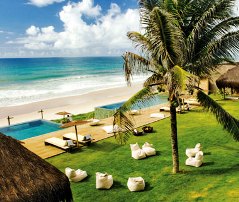
Kenoa

Barra de São Miguel, Brazil


It was a risky proposition for engineer Pedro Marques to quit his career to open a 23-room eco-retreat on a sleepy beach along Brazil’s Alagoan coast, north of Bahia. But the gamble has paid off in spades. The hotel wows with eucalyptus columns and natural wood and brick interiors, all of which reinforce the indoor-outdoor aesthetic that sets the retreat apart. Environmental responsibility is emphasized: staffers are instructed in conservation techniques to avoid disturbing the nearby preserve. Doubles from $630.


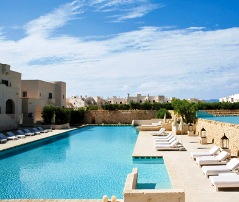
Borgo Egnazia

Puglia, Italy


Though this blinding-white stone monolith looks as ancient as the fortified farmhouses that surround it, sprawling Borgo Egnazia is actually brand- new. Rooms are monochromatic, splicing luxe (limestone double sinks; wide shaded terraces) with unexpected design moments (single olive branches in lieu of flowers). Twin pools are lounge-worthy and huge; if only management would designate one of them exclusively for adults. Doubles from $455.


Taj Falaknuma Palace

Hyderabad, India


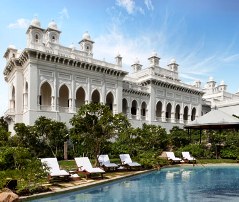
You’ll trade your car for a horse and carriage at the gate of the Taj Falaknuma Palace, which crowns a hill above the city, and be showered with rose petals when you ascend the marble steps. After a 10-year restoration, this former palace of the Nizam of Hyderabad (once the world’s richest man) is now a living museum, with 60 opulent guest rooms done up in ivories and golds. Wander the property if you like: nothing is off limits, including the library of rare books. Adding to the fairy-tale setting, at sunset you’ll hear the lilting strains of a flute in the courtyard. Doubles from $890.


Ritz-Carlton Shanghai

Pudong, Shanghai


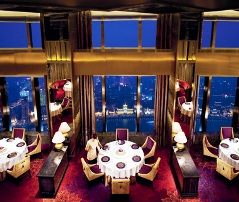
It’s almost impossible to actually walk anywhere in the frenetic Pudong neighborhood, so lucky for you that Ritz-Carlton’s second Shanghai property offers plenty of reasons to stay put. Topping off Cesar Pelli’s 58-story IFC Shanghai building, the 285-room hotel places you in a cloud-level fantasy. Guest rooms, with their Art Deco touches, have skyline views from floor-to-ceiling windows, Frette linens, and freestanding bathtubs built for lounging. Doubles from $534.


W Retreat Koh Samui

Thailand


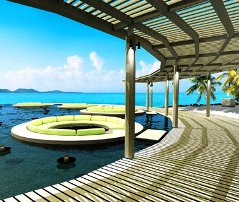
Bringing a long-lacking dose of mod design and youthful exuberance to this ever-popular Thai resort island, W Hotels’ first “Retreat” property in Southeast Asia hews to the brand’s urbane aesthetic. Fans of the cheeky W formula will find all the requisite diversions, such as morning Thai boxing. Seeking serenity? The resort occupies a coveted peninsula on Samui’s quiet northern coast. While the lure of the beach may be hard to resist, guest rooms offer plenty of watery temptations as well: all of the 75 glass-walled villas have private pools, and the best offer shimmering Gulf of Thailand views. Doubles from $712.


Matakauri Lodge

Queenstown, New Zealand


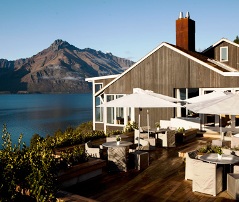
It’s no wonder hedge-funder turned hotelier Julian Robertson chose a secluded South Island spot for his family’s third hotel, Matakauri Lodge, the latest sibling to the Farm at Cape Kidnappers and the Lodge at Kauri Cliffs. The property is ideal for adventurers in search of a luxury lodge near Queenstown. The 11 large, timber suites, decorated in rust, orange, and cream by native design doyenne Virginia Fisher, feature walk-in closets, open fireplaces, and the requisite mountain vistas. Doubles from $460.

Monday, March 21, 2011

Cable-Laying Boom, Boost Internet


Dozens of new undersea internet cables are set to be laid over the next couple of years, providing a huge boost to worldwide capacity.

The huge boom in internet video has led to Domesday scenarios of the internet running out of capacity.


Yet, most of the bandwidth bottlenecks are found in the "last mile" of connections to the home, and not the undersea cables that underpin the worldwide internet infrastructure. Indeed, many experts believe that there is abundant amounts of "dark fibre" that remains unused in oceans across the world.

Nevertheless, the Financial Times reports that major telcos are pushing ahead with projects that will see dozens of new cables laid before the end of the decade.

At least 25 new cables will be laid by 2010, at a cost of $6.4bn, according to TeleGeography Research, a Washington-based telecoms consultancy.

"In light of the tremendous untapped potential capacity on many submarine cables, it may seem surprising that a new cable-building boom is underway," TeleGeography claims.

"The reasons for cable construction are often a combination of several factors; including dwindling available capacity on some cables, a desire for wider restoration options, the need for physically diverse routes, competition, and high capacity prices in some regions of the world."

The cables are predominantly set to be laid in areas such as Africa, the Caribbean and the Middle East, which are currently underserved.

Google, for example, announced plans to build a 10,000km fibre-optic cable linking the US and Japan in February.


Friday, October 29, 2010

China boasts world's fastest supercomputer


China boasts world's fastest supercomputer
AFP/Getty Images/File – Hundreds of ethernet cables are connected to rows of laptops for Flashmob 1, the first flashmob supercomputer, …

BEIJING (AFP) – China is set to trump the US to take the number one spot for the fastest supercomputer ever made in a survey of the world's zippiest machines, it was reported Thursday.

Tianhe-1, meaning Milky Way, has a sustained computing speed of 2,507 trillion calculations per second, making it the fastest computer in China on a list published Thursday.

But it is also 1.4 times faster that the world's current fastest ranked supercomputer in the US, housed at a national laboratory in Tennessee, according to the New York Times.

[Related: Fast train, big dam show China's engineering might]

Tianhe-1 does its warp-speed "thinking" at the National Center for Supercomputing in the northern port city of Tianjin -- using mostly chips designed by US companies.

The Tianjin Meteorological Bureau and the National Offshore Oil Corporation data centre have both started trials using the computer.

"It can also serve the animation industry and bio-medical research," Liu Guangming, the supercomputing centre's director, told state news agency Xinhua.

According to Jack Dongarra, a University of Tennessee computer scientist who maintains the official supercomputer rankings which are due to be released next week, the Chinese beast "blows away the existing number one machine".

"We don't close the books until November 1, but I would say it is unlikely we will see a system that is faster," he told the New York Times.

It is not the first time, however, that the US has had its digital crown stolen by an Asian upstart. In 2002, Japan made a machine with more power than the top 20 American computers put together.

Japan is also working on a new machine called "K Computer" in a bid to take the supercomputing crown.

Computer designer Steven J. Wallach is not overly worried by China's rise to computing superpower.

"It's interesting, but it's like getting to the four-minute mile," he told the New York Times. "The world didn't stop. This is just a snapshot in time.

"They want to show they are number one in the world, no matter what it is."

Tuesday, August 17, 2010

China Passes Japan as Second-Largest Economy

SHANGHAI — After three decades of spectacular growth, China passed Japan in the second quarter to become the world’s second-largest economy behind the United States, according to government figures released early Monday.

The milestone, though anticipated for some time, is the most striking evidence yet that China’s ascendance is for real and that the rest of the world will have to reckon with a new economic superpower.

The recognition came early Monday, when Tokyo said that Japan’s economy was valued at about $1.28 trillion in the second quarter, slightly below China’s $1.33 trillion. Japan’s economy grew 0.4 percent in the quarter, Tokyo said, substantially less than forecast. That weakness suggests that China’s economy will race past Japan’s for the full year.

Experts say unseating Japan — and in recent years passing Germany, France and Great Britain — underscores China’s growing clout and bolsters forecasts that China will pass the United States as the world’s biggest economy as early as 2030. America’s gross domestic product was about $14 trillion in 2009.

“This has enormous significance,” said Nicholas R. Lardy, an economist at the Peterson Institute for International Economics. “It reconfirms what’s been happening for the better part of a decade: China has been eclipsing Japan economically. For everyone in China’s region, they’re now the biggest trading partner rather than the U.S. or Japan.”

For Japan, whose economy has been stagnating for more than a decade, the figures reflect a decline in economic and political power. Japan has had the world’s second-largest economy for much of the last four decades, according to the World Bank. And during the 1980s, there was even talk about Japan’s economy some day overtaking that of the United States.

But while Japan’s economy is mature and its population quickly aging, China is in the throes of urbanization and is far from developed, analysts say, meaning it has a much lower standard of living, as well as a lot more room to grow. Just five years ago, China’s gross domestic product was about $2.3 trillion, about half of Japan’s.

This country has roughly the same land mass as the United States, but it is burdened with a fifth of the world’s population and insufficient resources.

Its per capita income is more on a par with those of impoverished nations like Algeria, El Salvador and Albania — which, along with China, are close to $3,600 — than that of the United States, where it is about $46,000.

Yet there is little disputing that under the direction of the Communist Party, China has begun to reshape the way the global economy functions by virtue of its growing dominance of trade, its huge hoard of foreign exchange reserves and United States government debt and its voracious appetite for oil, coal, iron ore and other natural resources.

China is already a major driver of global growth. The country’s leaders have grown more confident on the international stage and have begun to assert greater influence in Asia, Africa and Latin America, with things like special trade agreements and multibillion dollar resource deals.

“They’re exerting a lot of influence on the global economy and becoming dominant in Asia,” said Eswar S. Prasad, a professor of trade policy at Cornell and former head of the International Monetary Fund’s China division. “A lot of other economies in the region are essentially riding on China’s coat tails, and this is remarkable for an economy with a low per capita income.”

In Japan, the mood was one of resignation. Though increasingly eclipsed by Beijing on the world stage, Japan has benefited from a booming China, initially by businesses moving production there to take advantage of lower wages and, as local incomes have risen, by tapping a large and increasingly lucrative market for Japanese goods.

Beijing is also beginning to shape global dialogues on a range of issues, analysts said; for instance, last year it asserted that the dollar must be phased out as the world’s primary reserve currency.

And while the United States and the European Union are struggling to grow in the wake of the worst economic crisis in decades, China has continued to climb up the economic league tables by investing heavily in infrastructure and backing a $586 billion stimulus plan.

This year, although growth has begun to moderate a bit, China’s economy is forecast to expand about 10 percent — continuing a remarkable three-decade streak of double-digit growth.

“This is just the beginning,” said Wang Tao, an economist at UBS in Beijing. “China is still a developing country. So it has a lot of room to grow. And China has the biggest impact on commodity prices — in Russia, India, Australia and Latin America.”

There are huge challenges ahead, though. Economists say that China’s economy is too heavily dependent on exports and investment and that it needs to encourage greater domestic consumption — something China has struggled to do.

The country’s largely state-run banks have recently been criticized for lending far too aggressively in the last year while shifting some loans off their balance sheet to disguise lending and evade rules meant to curtail lending growth.

China is also locked in a fierce debate over its currency policy, with the United States, European Union and others accusing Beijing of keeping the Chinese currency, the renminbi, artificially low to bolster exports — leading to huge trade surpluses for China but major bilateral trade deficits for the United States and the European Union. China says that its currency is not substantially undervalued and that it is moving ahead with currency reform.

Regardless, China’s rapid growth suggests that it will continue to compete fiercely with the United States and Europe for natural resources but also offer big opportunities for companies eager to tap its market.

Although its economy is still only one-third the size of the American economy, China passed the United States last year to become the world’s largest market for passenger vehicles. China also passed Germany last year to become the world’s biggest exporter.

Global companies like Caterpillar, General Electric, General Motors and Siemens — as well as scores of others — are making a more aggressive push into China, in some cases moving research and development centers here.

Some analysts, though, say that while China is eager to assert itself as a financial and economic power — and to push its state companies to “go global” — it is reluctant to play a greater role in the debate over climate change or how to slow the growth of greenhouse gases.

China passed the United States in 2006 to become the world’s largest emitter of greenhouse gases, which scientists link to global warming. But China also has an ambitious program to cut the energy it uses for each unit of economic output by 20 percent by the end of 2010, compared to 2006.

Assessing what China’s newfound clout means, though, is complicated. While the country is still relatively poor per capita, it has an authoritarian government that is capable of taking decisive action — to stimulate the economy, build new projects and invest in specific industries.

That, Mr. Lardy at the Peterson Institute said, gives the country unusual power. “China is already the primary determiner of the price of virtually every major commodity,” he said. “And the Chinese government can be much more decisive in allocating resources in a way that other governments of this level of per capita income cannot.”


Source: Yahoo