Search This Blog

Showing posts with label Billionaires. Show all posts

Monday, August 15, 2011

Biggest Businesses Run by College Dropouts

Ever wonder where the chief executives of some of the world's most successful companies went to college? Well, don't tell your kids, but some CEOs never graduated college—and some never even bothered to apply.

From computers to cruise lines, these 10 CEOs made it to the top without a college degree and defied the idea that to be successful you have to have a diploma.

Ralph Lauren

CNBCralphLauren.jpg
Photo: Emmanuel Dunand | AFP | Getty Images
Position: CEO, Polo Ralph Lauren
Market Cap: $11.9 billion

Ralph Lauren, the chief executive of Polo Ralph Lauren , established his company in 1967 as a line of men's ties and developed the company into a global fashion empire. Lauren's successful clothing line came from his unique, classic style that went against conventional fashion of the time.

According to the Ralph Lauren website, Lauren said, "I never went to fashion school—I was a young guy who had some style. I never imagined Polo would become what it is. I just followed my instincts."

With only a high school diploma in hand, Lauren followed his instincts. His decision to ditch college and focus on running his business lead to a series of breakthroughs in the fashion world, including the first shop-within-a-shop designer boutique for men in Bloomingdale's department store in 1969. Lauren continued to build his empire, expanding it to include women and children's fashion, fragrances, and home furnishings.

Today, Polo Ralph Lauren is one of the most successful fashion companies in the world.

Richard Branson

CNBCbranson.jpg
Photo: Karim Jaafar | AFP | Getty Images
Position: CEO, Virgin Group
Company Worth: $18 billion
Virgin Media Market Cap: $8.1 billion

Forget graduating from college, this chief executive didn't even finish high school. Richard Branson, the current CEO of Virgin Group , dropped out of high school at age 16 to start Student Magazine . Four years later, Branson founded Virgin Group as a mail-order retailer. He opened his first record shop in London and two years later built Virgin's first recording studio. In 1977, Branson signed his first big name group, the Sex Pistols, and continued to sign popular artists such as the Rolling Stones and Culture Club.

In 1984, Branson developed Virgin Atlantic and the brand began to grow. Today, Virgin Group provides mobile, broadband, TV, radio, finance, health, tourism, leisure, and travel services.

Michael Dell

CNBCDell.jpg
Photo: Justin Sullivan | Getty Images
Position: Founder/CEO, Dell
Market Cap: $30 billion

Most 19 year olds would spend a thousand dollars on a spring break weekend, or a put it toward buying a new car, but Michael Dell spent his $1,000 founding Dell .

The founder and CEO of Dell expanded his company with the idea that "technology is about enabling human potential." In 1992, he became the youngest chief executive to earn a ranking on Fortune magazine's "Fortune 500" list. His staff also grew from a one-man operation to 100,000 employees in just eight years.

Today, the company provides information-technology services for global corporations, governments, health care providers, small and medium businesses, education institutions, and home computing users.

Dell is not the only company this CEO has had a hand in creating. Dell founded MSD Capital in 1998 and a year later launched the Michael and Susan Dell Foundation, a philanthropic organization for global issues.

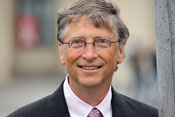
Bill Gates

CNBCgates.jpg
Photo: Sean Gallup | Getty Images
Position: Co-Founder/Chairman, Microsoft
Market Cap: $226.2 billion

College dropouts such as Mark Zuckerberg and Dustin Moskovitz are not the only successful business founders who attended, and then left, Harvard University.

Bill Gates, the founder of Microsoft , enrolled at Harvard as a freshman in 1973. Gates, who lived down the hall from Microsoft's current chief executive, Steve Ballmer, created BASIC, a programming language for the first microcomputer, during his first year of college.

Gates dropped out of Harvard in his junior year to concentrate all his efforts on a company he called Micro-soft with his childhood friend Paul Allen.

As if founding Microsoft wasn't enough, Gates went on to found Corbis , one of the world largest resources of visual information. He also earned a seat on the board of directors for Berkshire Hathaway , an investment company engaged in diverse business activity.

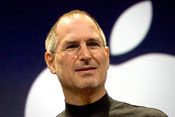
Steve Jobs

175jobs.jpg
Photo: David Paul Morris | Getty Images
Position: Founder/CEO, Apple
Market Cap: $362.4 billion

As a young boy, this college dropout showed an early interest in computers.

When he was 12, Steve Jobs, the chief executive of Apple , called Bill Hewlett, co-founder of Hewlett Packard , after finding his number in the phonebook. When Hewlett answered, Jobs said, "Hi I'm Steve Jobs. I'm twelve years old and I'm a student in high school. I want to make a frequency counter. I was wondering if you had any spare parts I can have?"

Hewlett gave Jobs the spare parts and hired him that summer to work on the assembly line at his company. During this time, Jobs formed a friendship with Stephen Wozniak, a soon-to-be dropout from the University of California at Berkley.

Jobs enrolled at Reed College after high school, but he later dropped out. He connected once again with Wozniak and the pair quit their jobs to start production on a computer in Jobs' garage.

There are different versions of how the pair came up with the name for Apple. The best-known story comes from Jobs summer spent working on an apple orchard and his love for the fruit. The bite in the side of the apple is said to be a play on the computer term "byte."

In a biography, Jobs said he was worth more than $1 million when he was 23, $10 million when he was 24, and $100 million when he was 25.

Apple went from a garage-based operation to a multibillion-dollar, worldwide corporation, and it all started with two college dropouts tinkering in a garage.

Today, Gates serves as Microsoft's chairman and as an advisor on key development projects.

Sunday, May 29, 2011

Cities with the Most Billionaires, 2011

When the U.S. economy was riding high for most of the 20th century, it would have been impossible to imagine a foreign city--especially one in a Communist country--with more of the planet's very richest than New York, home of old-money Wall Street. But that indeed is the case. Today Moscow is the city with the most billionaire residents in the world.

The Russian capital boasts 79 billionaires, a stunning increase of 21 in just one year. That more than edges out No. 2 New York, with 59 billionaires, and No. 3 London with 41. Other cities in the top 15 include such rising stars as Mumbai, Taipei, Sao Paolo and Istanbul. Los Angeles manages a tie for No. 8.

The combined fortunes of Moscow's billionaire population top $375 billion, more privately amassed wealth than in any other city in the world.

Despite New York's relegation to second place, the city remains a favored locale of billionaires, whose collective net worth is $221 billion. The Big Apple boasts some of the most expensive ZIP codes in the U.S., due in part to the real estate prices paid by billionaires in this city. Indeed, many Moscow residents own secondary homes in New York, including fertilizer and coal magnate Andrey Melnichenko, whose wife recently closed on a $12.2 million penthouse apartment. Even the world's richest man, Carlos Slim (home: Mexico City), snatched up a $44 million mansion on Central Park last year.

To compile our list, we tallied the primary residences of all 1,210 billionaires on the 2011 Forbes World's Billionaires list, our annual assessment of people sporting seven-figure or higher fortunes in U.S. dollars. We did not take secondary homes into account for this list.

In the U.S. we stuck strictly to city limits. For example, while a smattering of prominent media barons like Viacom founder Sumner Redstone and T.V. tycoon Haim Saban reside in Beverly Hills, they are not included in the pile of Los Angeles residents since Beverly Hills is its own city (although largely surrounded by Los Angeles).

Here are the the world's five top cities for billionaires:


Istanbul, Turkey scores No. 5.
Photo: Thinkstock

No. 5: Istanbul
Number of Billionaires: 36
Total combined wealth: $60.5 billion

Billionaires include: Turkey's richest person, Mehmet Emin Karamehmet, chairman of mobile phone company Turkcell; Turkey's former richest, finance and retail scion, Husnu Ozyegin; and Macedonian-born Sarik Tara, founder of construction giant, ENKA.


Hong Kong scores No. 4.
Photo: Thinkstock

No. 4: Hong Kong
Number of Billionaires: 40
Total combined wealth: $176.8 billion

Billionaires include: Greater China's richest person, Hutchison Whampoa chairman Li Ka-shing; the Kwok family, the brothers behind Hong Kong's largest real estate developer, SHKP; and Angela Leong, the controversial heiress of Stanley Ho's casino empire.


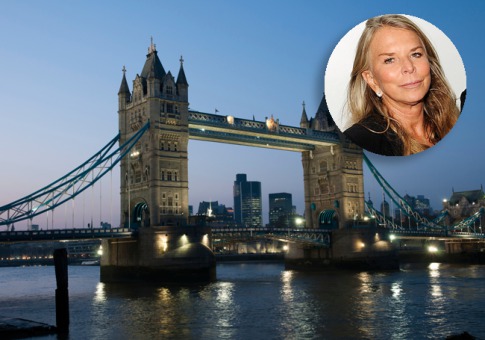
London scores No. 3.
Photo: Thinkstock

No. 3: London
Number of Billionaires: 41
Total combined wealth: $164.3 billion

Billionaires include: Indian citizen Lakshmi Mittal, the world's sixth-richest man thanks to steel-maker ArcelorMittal; daredevil Virgin founder Richard Branson; and Philip & Christina Green, the married couple behind clothing company Topshop.


New York City scores No. 2.
Photo: Thinkstock

No. 2: New York
Number of Billionaires: 59
Total combined wealth: $220.8 billion

Billionaires include: media mogul and current mayor Michael Bloomberg; fashion designer Ralph Lauren; and real estate developer-turned-reality T.V. celebrity Donald Trump.


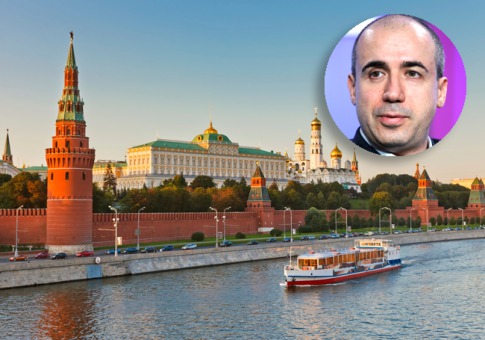
Moscow scores No. 1.
Photo: Thinkstock

No. 1: Moscow
Number of Billionaires: 79
Total combined wealth: $375.3 billion

Billionaires include: Russia's richest man, steel magnate Vladmimir Lisin; commodities investor and Chelsea soccer team owner Roman Abramovich; and venture capitalist and Facebook investor Yuri Milner.

Tuesday, May 3, 2011

How to Become a Millionaire in 3 Easy Steps

Remember that old Steve Martin joke about the secret formula for becoming a millionaire?

"First, get a million dollars ..."

Okay, getting the odometer on your investment portfolio to click over into seven digits isn't quite that easy. Only 7% of American households ever manage it, according to research firm Spectrem Group -- though it's certainly not for lack of desire.


While $1 million may not be worth what it was back when Martin was a wild and crazy guy in the late '70s, achieving that iconic number still has profound allure. It means that you're ahead of the game. You're assured a baseline retirement security. You've arrived.

Martin may have oversimplified, but the reality is that getting your portfolio to the $1 million mark is not nearly as difficult as you may think, even if you've managed to put away only a fraction of that amount so far. You just have to understand how to operate the three basic levers of wealth building: how much time you have to work with, how much you save, and how you invest that savings.

The slightest tug on one or two of these levers can dramatically affect your path to $1 million. Use our calculator to pinpoint when you're likely to become a millionaire based on your current situation and investing returns.

Lever 1: How Much Time You Allow

When you think about getting rich, what jumps to mind? Saving more money? Getting that money to work harder for you? Sure, those are critical elements. But they're not nearly as important as time: How long you allow dictates how you pull the other two levers -- which is why you want to estimate your schedule before going on to the next sections.

Sometimes you can't play with the time lever -- your kids will go to college when your kids go to college. But in certain cases, it's possible to control the clock.

Say you're now 45, want to retire at 62 with a million bucks, and have $250,000 saved. You've got 17 years. If you were saving $15,000 a year, adjusting for 3% inflation (meaning you put away $15,000 in year one, $15,450 in year two, and so on), and were able to earn 4% a year in real terms (7% before inflation), you wouldn't get there.

But if you delayed retirement by just two years, you'd hit the mark. As Chris Dardaman, head of Brightworth, a financial planning firm in Atlanta, says: "It's not the end of the world if you can't save as much or invest as well as you want -- as long as you save and invest longer."

In part, how long it'll take to become a millionaire depends on where you are now. If you already have $500,000 saved, it might take only 10 to 15 years, in inflation-adjusted terms, provided you sock away $10,000 to $15,000 a year and your investments outpace inflation modestly.

But even if you're only a tenth of the way there -- like the typical worker who's been investing in a 401(k) for 10 to 20 years, according to the Employee Benefit Research Institute -- you can make it in two decades or less, if you save a good chunk of income or earn a decent return.

Of course, that's the dilemma. While the ability to save more is within your control, the ability to generate a certain return isn't 100% in your hands. And as your time horizon shrinks, so too will your ability to accurately predict how your investments are likely to perform. So let time determine which of the two other levers -- savings or investing- -- you pull harder.

If you want to get to seven figures in 10 years or less: Seriously ramp up savings

With only a few years to invest, there's a significant risk that even a seemingly safe investment strategy could fall short of your expectations, because of the wide range of possible outcomes.

For example, according to computer models run by Ibbotson Associates, a moderate 60% stock/40% bond strategy could result in annualized returns of as much as 16% over the next 10 years, but it could also result in worst-case losses of nearly 1% a year. While that gain would certainly speed things up, a sustained loss -- even a modest one -- could be devastating given your time frame.

So if your self-imposed deadline for achieving $1 million (or any financial goal) is tight, instead of banking on optimistic returns, you're better off trying to boost your savings as much as possible. Then invest in a balanced mix of 50% stocks and 50% bonds that can be expected to beat inflation by a modest two or three percentage points a year.

If you're willing to wait more than 10 years: Invest more aggressively

The longer you have to invest, the greater chance you give the market to smooth out any ups and downs. Back to that 60%/40% portfolio: Over 20 years, the annualized spread could narrow to gains between 2% and 14%. So you could even take on a little more risk -- increasing your equity exposure, say -- for the possibility of better returns.

The single most important thing you need to know about building wealth: You're far better off being a dogged saver who's a mediocre investor than being a below-average saver who can knock the socks off the S&P 500.

Lever 2: How Much You Save

"It's sort of like exercising," says Stuart Ritter, a financial planner with T. Rowe Price. "You can devise the most optimal splits between cardio and weight training. But if you only go to the gym for six minutes, it won't really help you that much."

Let's say you have 20 years to invest and $250,000 already amassed. You can see from the table at right that boosting your annual savings from a modest $5,000 to an aggressive $20,000 could increase your chances of hitting $1 million in today's dollars -- $1.8 million nominally in 2031 -- from 31% to 67%, assuming a 60% stock/40% bond portfolio. If instead you kept your savings rate the same but upped your stock allocation to 80%, your chances of success would be less than fifty-fifty.

Savings may be the safer bet, but it's often the tougher task. Here are four ways to crank up the amount you're banking per year, in ascending order of difficulty.

Easy: Use Other People's Money

You've heard this before, but it bears repeating: The simplest way to boost your savings is to max out your 401(k) match, since that's a hand-out from your employer. Say you make $100,000 and save 3% of pay. If you're eligible to receive 50 cents on the dollar for the first 6% of salary deferred a common match you'd be leaving $1,500 a year on the table.

Tax-advantaged accounts like 401(k)s and IRAs also allow you to build wealth faster, in that case by putting Uncle Sam's money to work for you. On the same salary, by contributing $10,000 annually to a 401(k), you'd immediately reduce your income taxes by $2,800, assuming you are single and in the 28% bracket.

For now you can think of it as saving the equivalent of $10,000 while ponying up only $7,200. But even after paying taxes at withdrawal, you'd still come out ahead in most cases thanks to tax-deferred compounding at a 6% annual return, you would be up by $1,600 a year if you'd been socking away $10,000 for 15 years.

(This is why we assume that you'll use tax-deferred accounts as well as tax-efficient investments such as index funds to avoid the drag of taxes on your returns.)

A Little Harder: Bump Up Savings Systematically

"The easiest way to save is to put as much of your savings on autopilot as you can," says Shlomo Benartzi, chief behavioral economist for Allianz Global Investors.

A decade ago he and University of Chicago economist Richard Thaler devised a 401(k) plan feature that allows workers to preset future contribution hikes -- that is, it lets them specify in advance how much they want to ratchet up savings. A 2007 study found that those who used this option boosted contribution rates from less than 4% to nearly 14% in about 3½ years' time. Those who didn't barely changed their deferrals.

Today half of large employers offer this type of feature, reports Hewitt Associates. If your company is among them, use the tool to step up contributions.

A $2,000 bump will feel like only $55 more per biweekly paycheck thanks to the tax benefit. And with the money tucked into savings, you'll be forced to adjust your spending. Your plan doesn't offer this option? Partner up with a co-worker, put a date on your calendars, and remind each other to call HR that day.

Harder Still: Live on Last Year's Budget

After the market crashed in 2008, retirees were commonly advised to forgo inflation-adjusting withdrawals on their nest eggs for a few years, to give their accounts time to heal. People who are working can adopt the same strategy with savings rates.

Say you earn $90,000 a year and save $9,000 of it. That means you "spend" $81,000 a year on discretionary items (such as entertainment and travel), non-discretionary items (mortgage, utilities), and taxes. Let's also assume your pay climbs 2% annually for the next five years. Your $90,000 salary will rise to more than $99,000. But if you were to increase your "spending" each year only enough to cover the additional taxes you'd owe, you'd be able to save an increasing amount every year -- for a total of $15,000 by year five.

The challenge here, and the reason this falls under "harder still," is that if inflation rises faster than the long-term historical average of 3% -- as some economists fear -- you'd really have to trim your spending.

This plan may not be feasible in any case if you have a medical condition, what with health care costs expected to continue outpacing income growth for the next several years.

Hardest: Boost Your Income

There's only so much you can save on a given salary. At some point, the limits of austerity (you have to buy new clothes sometime!) and the impact of inflation will make it impossible to squeeze more out of your budget. When that happens, your only option is to increase your income.

Landing a higher-paying job would be one way to up your income. But since that promises to be challenging in today's tight labor market, bringing in income beyond your full-time job may be a more optimal choice.

If you have the capacity to do consulting work in the evenings or on weekends, even a small project could help you boost yearly savings by $10,000 or so. Plus, this would allow you to save more tax-deferred: You could contribute 25% of freelance pay up to $49,000 to a SEP IRA.

You might go further by taking steps toward starting a small business while still employed a path about half of entrepreneurs have taken, says the Kauffman Foundation. Or, with housing prices down in most markets and mortgage rates near historic lows, you could take a calculated risk on real estate, investing in rental properties to boost income.

True, improving your investment results may not speed you to $1 million as quickly as jacking up your savings rate. But it can help.

Lever 3: How You Invest

Say your goal is to have a million in less than 20 years, that you have $250,000 put away and that you are taking great pains to save $30,000 a year. Even at that aggressive pace, you wouldn't hit your deadline if your portfolio simply kept up with inflation. However, if you earned a modest 1% a year after inflation, you'd get to the equivalent of $1 million today in 18 years ($1.7 million in nominal dollars). Every percentage point shaves off a little more time.

Of course, the strategies that promise the greatest potential returns also present the greatest potential for loss so you'll want to avoid serious long shots like buying manganese futures or trading the Thai baht. A few saner strategies, in ascending order of risk:

Safe Bet: Cut Your Costs

The returns you collect from mutual funds will always be hampered by the expenses you pay. Don't think reducing costs makes much of a difference?

At Money's request, Vanguard ran a series of simulations to see how various asset mixes are likely to perform over the next 20 years.

Turns out, a typical 60% stock/40% bond portfolio, charging 1.25% a year, has a great probability of generating at least 5% annually over the next two decades. At that rate -- assuming 3% inflation, current savings of $250,000 and additional contributions of $15,000 a year -- you'd get to a million in 23 years.

But if you were able to boost those returns to 6%, which you could do by reducing portfolio costs to 0.25%, you'd make it in 20 years.

You can easily create a 60/40 portfolio with an overall expense ratio under 0.25%. For example, put 40% in Schwab Total Stock Market Index (SWTSX - News) (expense ratio: 0.09%), 20% in Vanguard Total International Stock (VGTSX - News) (0.26%) and 40% in Vanguard Total Bond Market (VBMFX - News) (0.22%). All three are on the Money 70, our list of recommended mutual funds and ETFs.

Wondering if you couldn't achieve similarly positive results simply by picking better funds? Good luck consistently finding managers that will consistently outperform the market, says Thomas Idzorek, chief investment officer for Ibbotson Associates.

Less Safe Bet: Tilt Toward Small Bargains.

In this strategy, you would keep your overall stock-to-bond split the same. You'd just move some of your equity allocation out of big blue chips and into small-cap value stocks -- shares of small companies that are being overlooked or once-larger companies that have fallen on hard times and are selling at attractive prices.

Between July 1927 and the end of last year, the average small-cap value stock gained more than 14% annually, according to Ibbotson Associates, vs. 9.8% for the S&P 500.

It's not all roses, however: Such stocks tend to be more volatile than your garden-variety blue chip because they've either been battered or lack competitive advantage.

Also, there have been long stretches when they have been out of favor, such as the mid- to late 1990s. Finally, since these shares have returned nearly three times as much as the broad market over the past decade, it's hard to imagine they can keep churning out outsize gains -- at least in the short run.

But in the long term "there's no reason to believe small-cap values won't sustain their advantage," says Paul Merriman, founder of Merriman Capital Management.

So if you have at least two decades to invest, gradually shift small amounts from large-caps into small value through a fund like T. Rowe Price Small Cap Value (PRSVX - News), which is on the Money 70. Do so until the shares are a quarter of your equity allocation, and history says you'll see a real impact. Since the late 1920s, a 60% stock/40% bond portfolio with this small-cap value tilt returned 9.7% a year, while a traditional 60/40 index portfolio returned 8.7%. With that edge, in 25 years you'd turn $200,000 into $970,000 in today's purchasing power vs. $770,000 without the small-cap bent.

Riskier Bet: Step Up Your Stock Stake.

History shows that the simplest thing you can do to boost long-term investment performance is to dial up your equity exposure. Since 1926, the average 50% stock/50% bond portfolio gained 8.2%, according to Vanguard. Raising the stock stake just a bit, to 60%, would have resulted in annualized gains of 8.7%.

There's a trade-off, of course: The more you tilt toward stocks, the higher your chances of losing money in a single year. A 50/50 portfolio has lost value in 17 calendar years since 1926; a 60/40 has fallen 21 times; a 70/30 sank in 22 years; and an 80/20 dipped in 23.

You'll suffer the most if the market dives near the end of your time horizon, since you won't have a chance to recover. For example, if you entered 2008 the last year the market suffered losses -- with $1 million, you'd have had $798,000 at the end of the year with a 60/40 mix.

Were your portfolio instead invested at 50/50, your million would've ended up at $840,000. So even if you think you can handle a greater stock exposure now, be sure to reduce the percentage as you approach your goal date.

Riskiest Bet: Leverage Your Equities

Yale professors Ian Ayres and Barry Nalebuff think there's a problem with how we invest. When you're young and can tolerate being all in equities, you don't have much money. When you're older, you may want to be only 50% in stocks, but in dollar terms that dwarfs how much you had in the market in your youth.

Therefore, the duo have controversially posited that young investors -- those in their twenties and thirties -- should leverage their equity positions, sometimes by as much as 2 to 1. In other words, if you have $20,000 to invest, not only should all of that go into stocks, but you should borrow an additional $20,000 so you have $40,000 in equity exposure.

Ayres and Nalebuff crunched the numbers going back to 1871 and found that over a lifetime this strategy consistently beat the traditional 110-minus rule (where you subtract your age from 110 and put the resulting percentage in stocks). Their method resulted in accounts 14% larger, on average. Even in the worst case, their approach came out ahead by 3%.

These professors aren't talking about taking a flier on a single stock. They recommend investing in the broad market, which you can do using a margin account at your brokerage to buy an index fund or ETF.

Or you can leverage your bets through options contracts that give you the right to buy or sell an index, such as the S&P, in the future. You'd reduce your stock exposure as you age. In fact, the extra risk you take in your twenties and thirties would allow you to be even more conservative -- possibly keeping as little as 20% in equities -- toward the end of your career.

There are, of course, caveats: While the profs say that someone in his forties could still benefit by leveraging -- say, 1.2 to 1 -- older folks or those with a time horizon of less than 20 years should think twice about trying this strategy. Leverage will magnify any losses you suffer in equities.

And that could put you in dire straits if your brokerage issues a margin call, meaning it requires you to sell some of your holdings because your account value is too low. (This is also a risk for young people, but less dire.)

Finally, if you work in a volatile industry where your future income looks shaky, you can't afford this type of risk. But if you've got a stable job and decades to invest? It may just make you a million bucks.

Monday, February 14, 2011

Famous heirs who could inherit billions

Every parent wants to be able to help their child. In some cases, this means coming up with the down payment on a car, and in others, it means co-signing an apartment lease. Then there are times when it means offering them a controlling stake in a major U.S. corporation.


The fortunes passed down from billionaire parents to their children have allowed businesses to continue under well-known family names long after the principals are gone. Those fortunes have also provided the resources to get a new venture off the ground.

Whether they're passing down a longstanding empire to the next generation or providing the backing for a new investment, the wealth that billionaire parents have handed down has created opportunities that otherwise might not exist.

Here are the children of several high-profile billionaires. While it's uncertain if the parents will pass down all of their riches, some of children have already used their parents' wealth and influence to their advantage.

cnbcheirs1.jpg
©Getty Images

David, Dylan and Andrew Lauren

If you don't know who Ralph Lauren is, then you're not much of a fashionista. Born Ralph Liftshitz in the Bronx, Lauren is a world-famous clothing designer who entered the business in 1967 as the owner of a necktie store. He sold his own designs there under the name "Polo," and 30 years later, Polo Ralph Lauren was a publicly traded company that took in over $5 billion in revenue, according to SEC filings.

The designer and his wife of over 45 years had three children -- Andrew, David and Dylan. Andrew is a producer of low-budget films and documentaries. David works at Polo Ralph Lauren as senior vice president of advertising, marketing and corporate communications. And daughter Dylan founded Dylan's Candy Bar, a chain of candy stores that she claims was inspired by seeing "Willy Wonka & the Chocolate Factory" at the age of 5.

cnbcheirs2.jpg
©Getty Images

Emma and Georgina Bloomberg

Mike Bloomberg is the mayor of New York City and one of the richest people in the U.S. He founded Bloomberg L.P., a financial data, media and software company that, according to The New York Times, has an estimated revenue of almost $7 billion. Two of the primary beneficiaries of this massive wealth are his daughters, Emma and Georgina. Emma has worked alongside her father, helping to implement the 311 phone number system that consolidated the city's thousands of agencies under a single, three-digit number.

Bloomberg used his considerable fortune to support his youngest daughter Georgina's love of horseback riding. Today, she is a professional equestrian who's considered one of the best in her field, but the pursuit is not without its risks. In 2002 she broke her back at the Hampton Classic, and in 2010 she suffered a concussion at a Syracuse riding show. However, days later, she announced to the New York Daily News that the accident would change nothing. "I'm going to get all better and go right back."

cnbcheirs3.jpg
©Getty Images

Amanda Hearst

Media tycoon William Randolph Hearst made his fortune at the turn of the 20th century by founding newspapers all over the United States, and he became so powerful and so influential that the main character in "Citizen Kane," Charles Foster Kane, was based on him.

His family fortune sometimes made them a target, as his granddaughter Patty Hearst found out when she was kidnapped in 1974 by a militant leftist organization, the Symbionese Liberation Army. However, her sister, Anna Hearst, has led a life much more consistent with that of a socialite.

Anna's daughter Amanda benefited from her family's wealth. She attended the prestigious Choate boarding school in Connecticut, and she has had a successful career as a model, appearing in advertisements for Ralph Lauren and on the cover of Cosmopolitan. She was quoted in Harper's Bazaar as requiring a yearly "maintenance cost" of over $130,000, although she now claims that the quote was taken out of context.

cnbcheirs4.jpg
©Getty Images

Paris and Nicky Hilton

The nationwide Hilton Hotels chain was founded in 1919 by Conrad Hilton. His grandson, Rick Hilton, is chairman and co-founder of Hilton & Hyland, a Beverly Hills real estate firm that caters only to people who can afford the most extravagant properties in the 90210 zip code. When he met Kathy Avanzino, it was love at first sight and the two married in 1979. Over 30 years later, they're still going strong, and they have raised two sons and two daughters.

One of their daughters, Nicky, has launched clothing lines and walked the runway in Australian fashion shows. Their other daughter is Paris, and you may have heard of her. She gained national attention when she starred in "The Simple Life" on Fox in 2003 with fellow socialite Nicole Richie, but her ambitions didn't stop at TV. She also wrote an autobiography in 2004, starred in the horror movie remake "House of Wax" in 2005 and released her debut album, "Paris," in 2006.

cnbcheirs5.jpg
©Getty Images

Donald Jr., Ivanka and Eric Trump

Donald Trump may be a celebrity thanks to the television show "The Apprentice," but his real estate enterprise is what made him a billionaire. "The Donald" has five children, and while 17-year-old Tiffany and 4-year-old Barron are unlikely to have plotted a career path just yet, Donald Jr., Ivanka and Eric have all taken positions alongside dad within The Trump Organization.

Donald Jr. holds the position of executive vice president within the company, and he also serves as ambassador for Operation Smile, a charitable organization that fixes cleft palates for children in developing nations. Eric also serves as executive vice president in the Trump Organization, as does sister Ivanka. However, Ivanka is the most well known of all of Trump's children, thanks to her work as a runway model and her appearances by dad's side on "The Apprentice."

Sunday, September 5, 2010

How frugal billionaires spend their money


Carlos Slim Helu (Carlos Slim), a telecom tycoon and billionaire with well-known frugal tendencies, has a net worth of $60.6 billion, according to Forbes. Assuming no changes in his net worth, he could spend $1,150 a minute for the next 100 years before he ran out of money. To put this in perspective, he could spend in 13 minutes what a minimum-wage earner brings home after an entire year of the daily grind.


Granted, the world's billionaires (all 1,011 of them) are in the debatably enviable position of having, quite literally, more money than they can possibly spend, yet some are still living well below their means, and save money in surprising places. Even non-billionaires (currently 6,864,605,142 of us) can partake in these seven spending tips from frugal billionaires:

[Click here to check savings products and rates in your area.]

1. Keep Your Home Simple
Billionaires can afford to live in the most exclusive mansions imaginable -- and many do, including Bill Gates' sprawling 66,000 square foot, $147.5 million dollar mansion in Medina, Wash. -- yet frugal billionaires like Warren Buffett choose to keep it simple. Buffett still lives in the five-bedroom house in Omaha that he purchased in 1957 for $31,500. Likewise, Carlos Slim has lived in the same house for more than 40 years.

2. Use Self-Powered or Public Transportation
Thrifty billionaires including John Caudwell, David Cheriton and Chuck Feeney prefer to walk, bike or use public transportation when getting around town. Certainly these wealthy individuals could afford to take a helicopter to their lunch meetings, or ride in chauffeur-driven Bentleys, but they choose to get a little exercise and take advantage of public transportation instead. Good for the bank account and great for the environment.

3. Buy Your Clothes off the Rack
While some people, regardless of their net value, place a huge emphasis on wearing designer clothes and shoes, some frugal billionaires decide it's simply not worth the effort, or expense. You can find David Cheriton, the Stanford professor who matched Google founders Sergey Brin and Larry Page to the venture capitalists at Kleiner, Perkins, Caufield & Byers (resulting in a large reward of Google stock), wearing jeans and a t-shirt.

Ingvar Kamprad, the founder of the furniture company Ikea, avoids wearing suits, and John Caudwell, mobile phone mogul, buys his clothes off the rack instead of spending his wealth on designer clothes.

4. Keep your Scissors Sharp
The average haircut costs about $45, but people can and do spend up to $800 per cut and style. Multiply that by 8.6 (to account for a cut every six weeks) and it adds up to $7,200 per year, not including tips. These billionaires can certainly afford the most stylish haircuts, buy many cannot be bothered by the time it takes or the high price tag for the posh salons. Billionaires like John Caudwell and David Cheriton opt for cutting their own hair at home.

[Stock Picks From the World's Greatest Investors]

5. Drive a Regular Car
While billionaires like Larry Ellison (co-founder and CEO of Oracle Corporation) enjoy spending millions on cars, boats and planes, others remain low key with their vehicles of choice. Jim Walton (of the Wal-Mart clan) drives a 15-year-old pickup truck. Azim Premji, an Indian business tycoon, reportedly drives a Toyota Corolla. And Ingvar Kamprad of Ikea drives a 10-year-old Volvo. The idea is to buy a dependable car, and drive it into the ground. No need for a different car each day of the week for these frugal billionaires.

6. Skip Luxury Items
It may surprise some of us, but the world's wealthiest person, Carlos Slim (the one who could spend more than a thousand dollars a minute and not run out of money for one hundred years) does not own a yacht or a plane. (Reducing the amount you spend is the easiest way to make your money grow.)

Many other billionaires have chosen to skip these luxury items. Warren Buffett also avoids these lavish material items, stating, "Most toys are just a pain in the neck."

What We Can Learn
Some of the world's billionaires have frugal tendencies. Perhaps this thrifty nature even helped them make some of their money. Regardless, they have chosen to avoid some unnecessary spending (at least on their scale) and the 6,864,605,142 non-billionaires out there can follow suit, eliminating excessive, keep-up-with-the-Jones style spending. No matter what a person's income bracket is, most can usually find a way to cut back on frivolous spending, just like a few frugal billionaires.